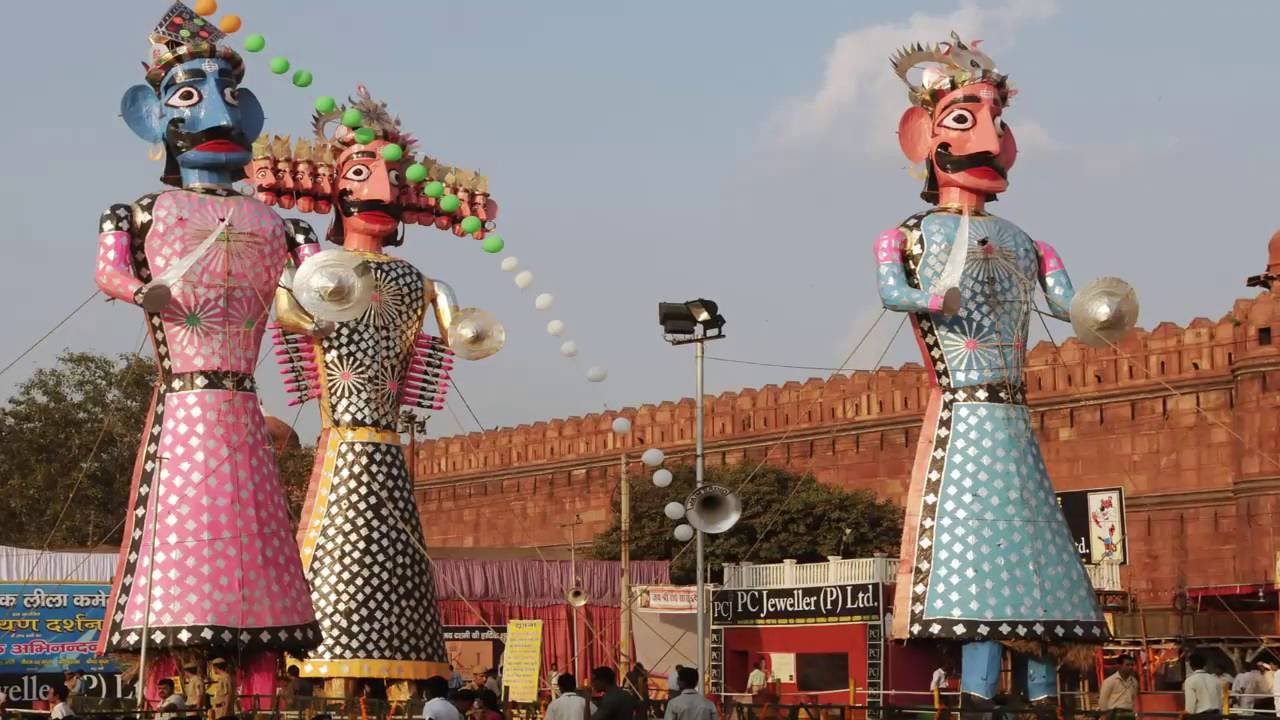
The Ultimate Triumph: Where Divinity Defeats the Darkness
Dussehra, also known as Vijayadashami, is the grand finale of the Indian festive season. Celebrated on the tenth day of the lunar month of Ashwin, it marks the end of the nine-night Navratri festival. In 2026, the nation will unite in celebration on Wednesday, October 21st (with some regions observing rituals on October 20th based on local Tithis).
It is a day that carries a dual legacy: the victory of Lord Rama over the ten-headed Ravana and the triumph of Goddess Durga over the buffalo demon Mahishasura.
1. The North: The Night of the Effigies
In Northern India, Dussehra is synonymous with Ramlila—the dramatic folk re-enactment of the Life of Rama.
-
Ravana Dahan: The climax occurs at sunset when towering effigies of Ravana, his brother Kumbhkaran, and son Meghnad—stuffed with crackers—are set ablaze. As the structures crumble in a shower of sparks, it symbolizes the destruction of the "Ten Evils" (Lust, Anger, Greed, etc.) within oneself.
-
The Victory of Dharma: The air is filled with chants of "Jai Shri Ram," marking the restoration of cosmic order.
2. The South: Golu Dolls and Ayudha Puja
In Southern states like Tamil Nadu, Karnataka, and Andhra Pradesh, the festival takes on a scholarly and artisanal tone.
-
Bommala Golu: Families arrange elaborate tiered displays of dolls (Golu), representing goddesses, scenes from mythology, and everyday village life.
-
Ayudha Puja: This is the "Worship of Tools." Whether it is a farmer’s plow, a musician’s lute, a student's books, or a software engineer’s laptop, instruments of livelihood are cleaned, garlanded, and blessed, acknowledging the divine energy in our work.
-
Vidyarambham: For many, this is the most auspicious day for children to begin their education or start learning a new art form.
3. The East: The Bitter-Sweet Farewell
For Bengalis and Odias, Dussehra is Bijoya Dashami, the day Goddess Durga returns to Mount Kailash.
-
Sindoor Khela: Married women smear each other with vermilion, celebrating the victory of the feminine power (Shakti).
-
Durga Visarjan: Grand processions lead to rivers or the sea for the immersion of the idols. The atmosphere is one of "Bijoya" (Victory), where people embrace and exchange sweets, promising to meet again next year.
Dussehra 2026: Fast Facts & Planning
| Feature | Details for 2026 |
| Main Date | October 21, 2026 (Wednesday) |
| Vijay Muhurat | The most auspicious time for new ventures (typically late afternoon). |
| Primary Symbol | The burning of the 10-headed effigy (The Dasha-Hara). |
| Top Destination | Mysuru (Karnataka) for the world-famous Elephant Procession. |
Top Spectacles You Shouldn't Miss
-
Mysore Dasara: The "Jamboo Savari" is a royal sight where the Goddess Chamundeshwari is carried atop a lead elephant in a 750kg golden howdah. The Mysore Palace is illuminated with over 100,000 light bulbs, a sight visible from miles away.
-
Kullu Dussehra: Unlike other regions, celebrations in Himachal Pradesh begin on the day others finish. Over 200 local deities are brought in colorful palanquins to the Dhalpur Maidan for a week-long celebration.
-
Kota Dussehra Mela: One of the largest rural fairs in Rajasthan, known for its massive effigies and vibrant cattle fair.
Spiritual Significance: The 10 Heads of Ravana
Dussehra is a psychological reset. The ten heads of Ravana are said to represent ten negative traits that every human must conquer:
-
Kama (Lust) | 2. Krodha (Anger) | 3. Moha (Attachment) | 4. Lobha (Greed) | 5. Mada (Pride) | 6. Matsarya (Envy) | 7. Manas (Selfishness) | 8. Tamshik (Inertia) | 9. Ahankar (Ego) | 10. Amanavta (Inhumanity).
Pro-Tips for 2026
-
Travel Early: If you plan to visit Mysore or Bastar (Chhattisgarh), book your accommodation at least 4–5 months in advance.
-
Eco-Friendly Celebrations: Many cities are now moving toward "Green Effigies" and artificial ponds for immersion to protect the environment.
-
The "Shami" Tree: In many cultures, exchanging leaves of the Shami tree (representing gold) is a tradition meant to bring prosperity and strength.
Final Thought: Dussehra 2026 is more than just a holiday; it is a cultural anchor. It reminds us that no matter how powerful "evil" or "darkness" may seem, it is temporary. Truth (Satya) and Righteousness (Dharma) are the only enduring forces in the universe.
दशहरा और रावण दहन के बारे में हिंदी में पढ़ने के लिये यहां क्लिक करें