Commemorating the ‘Lok Nayak’: The Architect of Modern Indian Democracy
Every year on October 8th, India pauses to honor the memory of one of its most selfless and towering political figures: Jayaprakash Narayan, affectionately known as JP or Lok Nayak (Leader of the People). His death anniversary is not merely a day of mourning, but a day to reflect on the power of the individual to challenge tyranny and the enduring strength of the Indian democratic spirit.
From a fiery revolutionary in the freedom struggle to the catalyst of the "Total Revolution" in the 1970s, JP’s life remains the ultimate blueprint for political integrity and grassroots activism.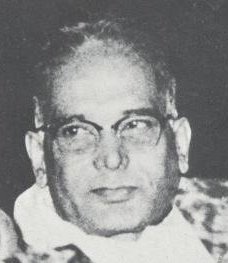
The Man Who Defined 'Total Revolution'
Jayaprakash Narayan’s most significant legacy is the concept of Sampoorna Kranti (Total Revolution). In the mid-1970s, at a time of deep political unrest, JP emerged from retirement to lead a student-led movement against corruption and authoritarianism.
-
The Call for Change: He famously challenged the status quo, advocating for a transformation that wasn't just political, but social, economic, and moral.
The 1974 Movement: Under his leadership, the "Bihar Movement" became a national wave, eventually leading to the first non-Congress government at the Center in 1977.
-
Power Without Office: Despite being the kingmaker of Indian politics, JP never sought the Prime Minister’s chair or any cabinet position, embodying the true spirit of a Lok Nayak.
The Life of a Crusader: Key Milestones
JP’s journey was one of constant evolution, marked by an unwavering commitment to the marginalized:
-
The Freedom Fighter: Educated in the United States, JP returned to India as a staunch Marxist, eventually joining the Congress Socialist Party. His daring escape from Hazaribagh Central Jail during the Quit India Movement (1942) made him a folk hero.
-
The Sarvodaya Leader: Post-independence, influenced by Mahatma Gandhi and Vinoba Bhave, he shifted toward Sarvodaya (Universal Uplift), dedicating years to the Bhoodan Movement (land gift) to help landless peasants.
-
The Protector of Democracy: During the Emergency (1955–1977), he was the primary voice of the opposition, jailed despite his failing health, yet successfully uniting fractured political parties to save India’s democratic fabric.
Interactive Legacy Guide: The JP Philosophy
| Pillar of Thought | Description |
| Socialist Roots | Deep concern for the equality of the working class and peasantry. |
| Non-Violence | A steadfast belief in peaceful protest and Satyagraha. |
| Grassroots Power | The belief that true power must reside in the villages and the common man, not just in New Delhi. |
| Selflessness | Rejecting formal power to maintain the role of a moral watchdog for the nation. |
How the Day is Observed
Across India, particularly in Bihar and New Delhi, JP’s death anniversary is marked with solemnity and inspiration:
-
Floral Tributes: High-ranking dignitaries, including the President and Prime Minister, pay homage at his statues and memorials.
-
Seminars on Democracy: Universities and political institutions hold debates on "The Relevance of JP in Modern India," focusing on transparency and youth in politics.
-
Gram Sabhas: In rural areas, the day is often used to discuss local governance, honoring his vision of decentralized power.
Why JP Still Matters Today
In an era of hyper-partisan politics, Jayaprakash Narayan stands as a reminder that dissent is the soul of democracy. He taught India that when the government goes astray, it is the duty of the "Lok" (People) to stand up and demand accountability.
His life tells the story of a man who was a "Socialist" by heart, a "Gandhian" by action, and a "Democrat" by conviction.
जय प्रकाश नारायण जी के बारे में हिंदी में पढ़ें, क्लिक करें